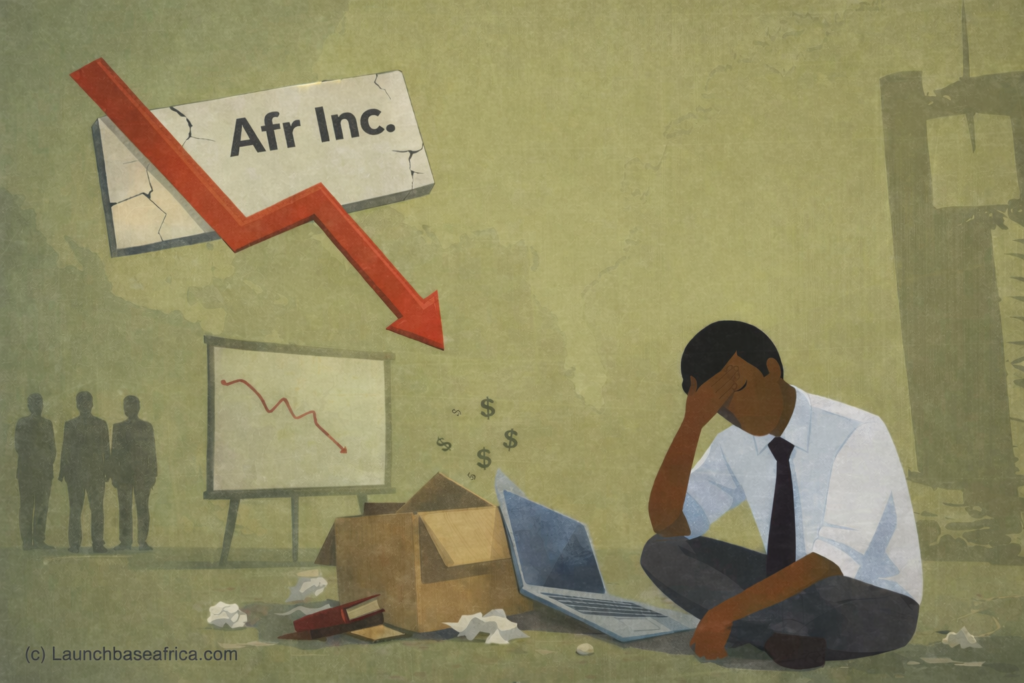
Over $500M Mapped in African Startup Collapses Since 2024
A data-driven post-mortem maps more than $500 million in African startup failures between 2024 and 2026, using eight graphs to identify the structural blind spots behind the collapses. The analysis covers the two-year period and is positioned as a definitive ecosystem-level accountability exercise.
The Collapse Wave: currency volatility was the trigger, not the cause
GoLemon was still making a profit on every single order it fulfilled — ₦43,700 average basket, positive margin each time. It still died.
That detail cuts through the usual story about bad founders or a funding drought. The model was working at the transaction level. What broke it was that Nigeria's naira lost more than half its value, which meant warehouse leases, diesel, spare parts and software licences all got more expensive in local terms — while household incomes shrank and order volumes fell. Fixed costs rose; revenue didn't. The maths collapsed.
The harder lesson in this data isn't about execution. It's that a high-fixed-cost business in a currency-volatile market is, structurally, a bet on exchange-rate stability. Copia, Twiga, GoLemon all made that bet. The asset-light platforms that survived — Chowdeck, Glovo — never had to.
1 source
- Over $500M Lost in Two Years: Eight Graphs That Map the Blind Spots Behind Recent African Startup Collapses · launchbaseafrica.com · T1