Daily Summary2026-06-30
Stories clustered across sources, with day-to-day continuity and threading.
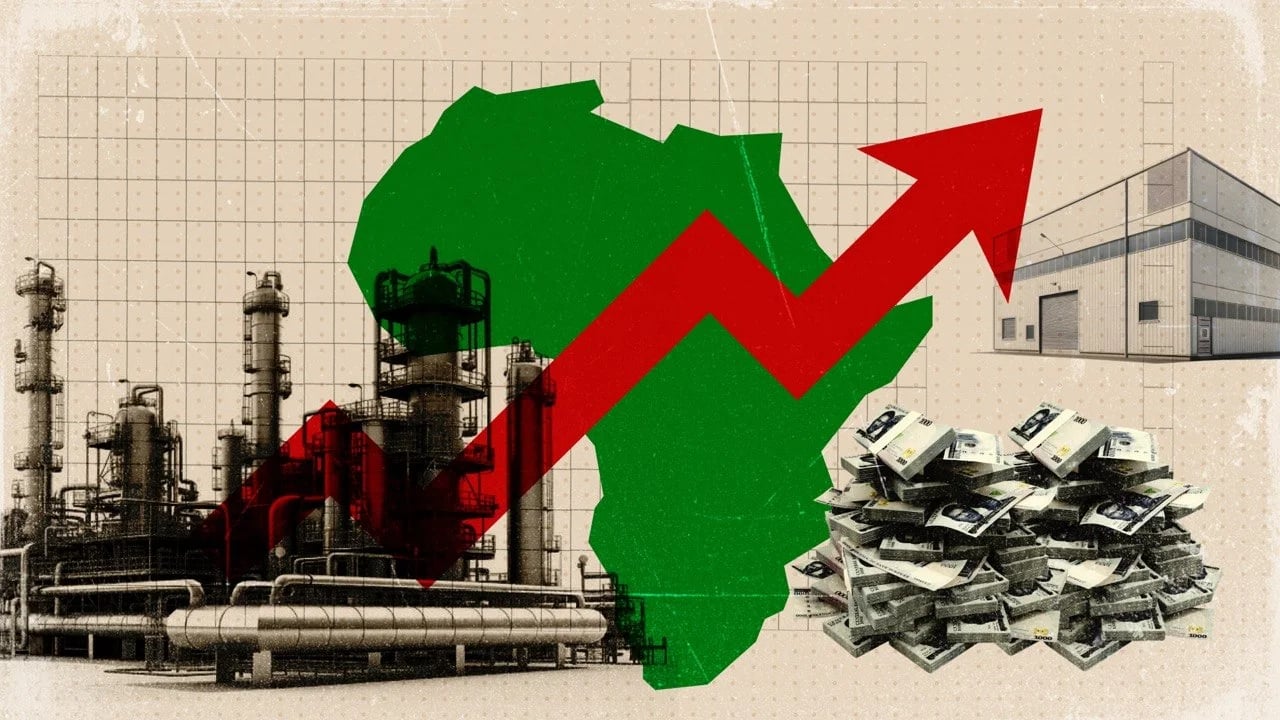
African startups raise $1.5B in H1 2026 as equity rebounds
African startups raised over $1.5 billion in the first half of 2026, with equity financing staging a notable comeback after a period of contraction. Kenya led the continent in deal activity while Nigeria underperformed relative to its historical share. The figures represent a market-defining data point for the pan-African funding landscape.

First systematic data on 56 African tech layoff events published
A new dataset has documented 56 distinct tech layoff events across Africa between 2023 and 2026, providing the first systematic empirical account of workforce reductions in the continental ecosystem. The data surfaces patterns of stress that have previously been anecdotal or reported on a case-by-case basis.
Nigerian fintechs convert to microfinance banks in sector model shift
Nigerian fintech companies are converting their operating licences to microfinance bank status, enabling them to accept deposits and fundamentally redefining the competitive structure of the sector. The transition from payments-only operations to deposit-taking institutions shifts the entire model for how fintechs engage with customers and regulators.

African fintech credit shifts toward known cash flows as stranger-lending model fades
A new analysis argues that African fintech lenders are moving away from lending to unknown borrowers and toward credit models anchored in verified, recurring cash flows. The shift carries direct implications for credit product design, risk underwriting, and investor positioning across the continent's digital lending sector.
Holocene raises $3M fund targeting small climate-tech exits in Africa
Holocene has raised a $3 million fund explicitly designed to generate small-scale exits in Africa's climate technology sector, directly addressing the continent's chronic liquidity gap for investors in the space. The vehicle represents a novel structural approach to solving the exit problem that has constrained climate-tech investment returns on the continent.
Starlink's Namibia licence battle moves to High Court
Starlink's exclusion from Namibia's internet services market has moved into the High Court after a lawyer confirmed the satellite provider's legal challenge can proceed at that level. The case is now positioned to set a judicial precedent on satellite internet licensing that could influence regulatory approaches across the continent.
I&M Bank hires departing Absa Kenya CEO Abdi Mohamed
I&M Bank has appointed Abdi Mohamed, who is stepping down from Absa Kenya after a 32-year career, as its new Kenya chief executive. The high-profile executive move signals intensifying competition and increasing talent fluidity at the leadership level within Kenya's banking sector.
Prosus e-commerce operations turn profitable
Prosus has reported that its e-commerce operations have turned profitable after years of losses, representing a significant shift in the financial trajectory of one of Africa's most prominent technology investment groups. The milestone is being assessed as a positive signal for African tech valuations and investor confidence in the exit potential of e-commerce assets.
Safaricom's OneApp super-app reaches 4.7 million users as legacy apps retire
Safaricom's My OneApp has reached 4.7 million users as the company moves to phase out its legacy standalone applications. The consolidation onto a single platform marks a concrete step in Africa's broader super-app convergence trend.
South Africa deploys AI surveillance network ahead of anti-migrant protests
South Africa is deploying an integrated surveillance network combining drones, artificial intelligence, and CCTV cameras ahead of anticipated anti-migrant demonstrations. The state-private surveillance buildout signals governance tension with direct implications for how AI and data technologies are deployed in the country's public security architecture.
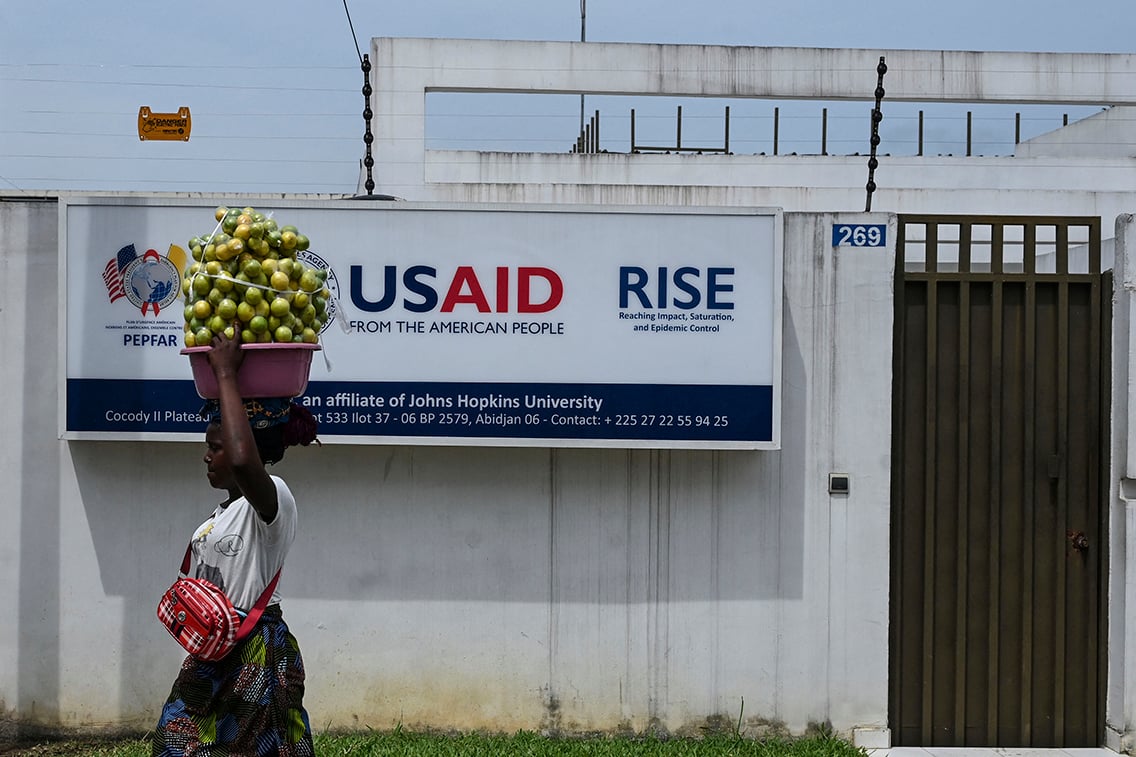
25% bilateral aid drop forces African ecosystem rethink on non-grant capital
A 25 percent drop in bilateral aid over one year is forcing African startup ecosystems and social ventures to urgently reassess their reliance on grant capital and identify alternative non-grant financing structures. The shift is particularly acute for climate, health, and education startups that have historically depended on development funding.
FCCPC denies new loan app approvals in Nigeria
Nigeria's Federal Competition and Consumer Protection Commission has publicly denied reports that new loan app approvals have been issued, clarifying the regulatory status of digital lending licences in the country. The statement reinforces the FCCPC's ongoing scrutiny of digital lending operators in Nigeria.

Village Capital distributes $500K grants to 32 African climate startups
Village Capital has closed a $500,000 grant programme distributing capital across 32 climate-focused startups in Africa. The programme provides a concrete snapshot of where early-stage climate startup funding is flowing on the continent.

IMF reaches staff-level deal to unlock $1.6B for Egypt
The International Monetary Fund has reached a staff-level agreement with Egypt that could unlock $1.6 billion in financing, easing the country's macroeconomic pressure. The deal is expected to improve conditions for technology investment by stabilising Egypt's fiscal and foreign exchange environment.
EBID commits $268M to Taraba State industrial development
The ECOWAS Bank for Investment and Development has backed Taraba State in Nigeria with a $268 million investment package targeting industry, agriculture, and renewables. The commitment represents a significant development finance institution signal for infrastructure and economic development in one of Nigeria's less-capitalised states.

Ghana community banks seek faster Bank of Ghana approvals
Community banks in Ghana are calling for the Bank of Ghana to accelerate its approval processes, arguing that regulatory bottlenecks are slowing their expansion and limiting financial inclusion progress. The friction is identified as a direct barrier to extending banking services to underserved communities.

Zeepay flags active Court of Appeal case, urges market caution
Ghanaian fintech Zeepay has confirmed that a legal dispute involving the company remains before the Court of Appeal and has urged caution in interpreting external reports about the matter. The active litigation introduces legal uncertainty for one of West Africa's more prominent cross-border payment operators.

Ford rehires engineers after AI quality-control failures
Ford has rehired human engineers after artificial intelligence systems failed to meet manufacturing quality control standards, providing a concrete cautionary data point on the limits of AI deployment in operational settings. The development is being noted by African firms evaluating AI integration in their own production and logistics operations.

Sub-Saharan Africa imports over 90% of assistive technology despite policy gains
More than 90 percent of assistive technology used in Sub-Saharan Africa is imported, exposing a persistent manufacturing and market development gap despite incremental policy progress. The data highlights a significant unaddressed opportunity for local production and healthtech investment in the region.
South Africa's Octiv fitness SaaS adds discovery feature at global scale
South African gym management platform Octiv, which operates across 1,400 gyms in 40 countries, has launched a new discovery feature for its platform. The product update reflects ongoing global B2B scaling by a South African SaaS company.

WhatsApp introduces usernames, removing phone-number dependency
WhatsApp has introduced a username feature that allows users to communicate without sharing their phone numbers, representing a meaningful privacy shift on Africa's most widely used messaging platform. The change has implications for how individuals and businesses manage identity and contact on the app.

Bank of Ghana flags systemic risk from rising domestic borrowing
The Bank of Ghana has raised concern about systemic risk building as domestic borrowing by the state rises, shifting debt exposure toward local commercial and community banks. The warning is directly relevant to fintech operators and banking investors assessing credit and liquidity risk in the Ghanaian market.
OPay introduces emergency lock and safety PIN against mobile fraud
OPay has launched an Emergency Lock feature and Safety PIN function for Nigerian users, responding to the country's rising incidence of mobile financial fraud. The product additions signal growing platform maturity and a direct response to security risks in Nigeria's digital payments environment.

Structural barriers keep African youth out of the digital economy
A new analysis diagnoses why Africa's pipeline of capable young people fails to translate into meaningful digital economy participation, identifying structural rather than individual barriers as the primary constraint. The framing is directed at ecosystem builders and policymakers seeking to improve talent-to-opportunity conversion on the continent.
Nigerian AI startup Viewlocked applies AI to travel planning
Nigerian startup Viewlocked has built an AI-powered travel planning platform, representing an early-stage application of vertical AI tools in the Nigerian consumer market. No traction or funding data has been disclosed alongside the product announcement.
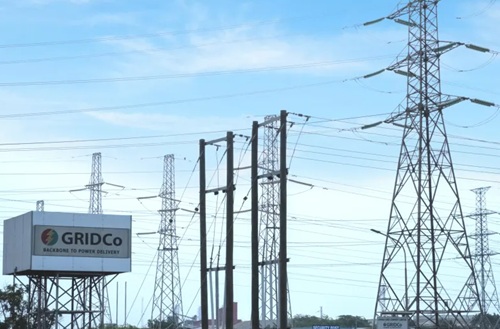
Accra floods trigger power cuts and disrupt Ghana's utility digital infrastructure
Severe flooding in Accra has prompted the Public Utilities Regulatory Commission to back emergency power cuts across parts of the city, while the Electricity Company of Ghana works to restore flood-disrupted digital payment and vending systems. The crisis simultaneously paralysed road access and utility infrastructure, illustrating the compound climate-infrastructure risk facing Ghana's digital economy.
AI agents enter South Africa's recruitment market
AI agents are being evaluated as replacements for traditional hiring tools in South Africa's high-volume recruitment market, adding a second major vertical to the country's emerging AI agent deployment landscape. The development extends earlier reporting on AI agents entering South Africa's consumer travel sector.